Holy Geez! Storm surge animation takes imaging to the next level

storm-surge_crop

https://www.wired.com/story/weather-channel-hurricane-florence-storm-surge-graphic/

We are living in a wondrous time. Read this WIRED article about how the Weather channel very quietly deployed a brand new imaging technology to very viscerally depict Storm Surge data in a way that WILL GET FOLKS OUT OF THE FLOOD ZONE. Some do not leave because there is a lack of understanding of “how bad will it be, really?” After watching the video above, I don’t think there will be ANY question.

It is a fascinating illustration of how far we are coming with virtual reality, and combining this with real images to create augmented reality.

CMIO’s take: We need this in EHRs and healthcare IT to bring home the visceral impact of our care and our decisionmaking. Who’s in?

Open notes in a Resident clinic: research study results

19498357-10-4-cover

Research study paper is here:    http://ow.ly/6eY530jYZJy

We’re published! Thanks to co-authors Bradley Crotty MD, Corey Lyons MD, and Matthew Moles MD, we helped a multi-health system collaborative to study the idea of Open Notes in primary care residencies (family medicine and internal medicine at University of Colorado Health system), with research findings above.

Ultimately there is some anxiety from both faculty and residents about patients reading their written progress notes online, after the physicians have signed off on those visit notes. We are happy to claim that our program, of all the training programs was least optimistic that this would turn out well for our physicians and patients.

Overall, though, since we gathered this survey data, we have gone on to turn on Open Notes throughout our health system (UCHealth) and now uniformly offer Open Notes to all patients in our 700 clinics, 11 hospitals, and 21 emergency departments. The fear that the “world would come to an end” has not yet come to pass, and we are hearing positive things from our patients about their ability to read notes and benefit from them, including:

  • I often forget much of what we discussed in the visit, now I can go back and refresh my memory
  • Sometimes my wife asks me “what did the doctor say?” and now we can go review it together
  • Sometimes my other doctors don’t receive the consultation letter from my specialist, and now I can show him/her that letter/note from my patient portal. I can be in charge of my own information
  • I can use my doctors note to look up words I don’t understand and get more background information so that I can ask more intelligent questions at my next visit; I feel like a part of my own healthcare team

CMIO’s take: it is good to study what we do. As Robert Anderson MD, one of my mentors told me: “We should use the laboratory of our direct patient care to study and learn. Everything we do with patients should be evaluated and can be improved.” Thanks, Bob!

I wanted Vicodin, not Herbal Tea (nytimes)

We are in the midst of a national opioid crisis. It is a crisis, partially, of our own making. In the past decade we physicians were criticized for not adequately addressing the pain of our patients, to the point of creating another vital sign: “pain score.” And then dutifully tracking this score and catering to it, and addressing pain, often with rehab therapy, with more aggressive interventions, injections, surgeries, and, yes, sometimes with pain meds, including narcotics and anxiolytics.

And on top of this, we layered “patient satisfaction” as a rubric, and now a method of affecting physician reimbursement. What could go wrong? Isn’t satisfying our patients a core precept of our identity as physicians?

Actually, come to think of it… no.

We are here to help our patients get better.

To cure sometimes, to relieve often, and to comfort always.
–15th century folk saying

But there’s nothing in that saying that says “and always write for a narcotic script if you’re in danger of getting a low satisfaction score.

So, here we are, with an opiate crisis, and faced with the very difficult task of reducing or eliminating opiate use in patients whom we have PUT on chronic opiates. So, this NYtimes article is timely and fascinating.

In fact, we are in the midst of designing and implementing an ERAS program (Enhanced Recovery After Surgery) in our health system, to entirely eliminate the use of opiates before, during and after surgery. Apparently pioneered by surgeons at Duke University, we are well on the way to experiencing similar benefits for our patients, faster recovery, reduce hospital stays, higher patient satisfaction.

This is reminiscent of Atul Gawande’s book “Better” where he describes the idea that “If even elite athletes have coaches to improve their game, maybe surgeons should have coaches.” And then finding that having a former mentor observe him during surgery, he received pages of notes on how to improve his operating technique and outcomes. Hmm. We should do more of this, inspecting our usual practices, and working out how to continuously improve.

CMIO’s take? There is always something new to learn.

Happy holidays from the Large PIGs, JIG, and CMIO

Dave Corry arriving late to our group photo, to the CMIO’s amusement and dismay

I hope that you are making plans to celebrate the season, to connect with friends, colleagues, family, and take time for yourself.

I consider myself so fortunate to work with such a great group of informaticists or informaticians (inforMAGICIANs?!), or informatics people, whatever we call ourselves. The work we do, sometimes seems like a grind, but keep in mind, fellow informagicians, that we strive to improve the lives of patients, colleagues and staff by improving the information systems we use for the greater good. 

We try to keep it light in our naming of projects and committees. For example, our Joint Informatics Group (including clinical informatics nurses as well as physician informatics) is JIG. Our physician informatics group are the PIGs. This leads to the New PIG book club, the Small PIG leadership group, and the meeting, which encompasses all physician informaticists: Large PIG. 

And, be sure to throw up your hands and have a good laugh once in awhile. By the way, here’s an updated picture with Dave raising a glass. 

CMIO’s take? Here’s to you and the good work we all do. Cheers!

Where does creativity come from?*

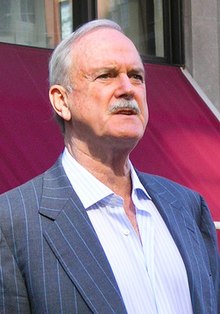
“Where does creativity come from? We don’t know but we are certain that it doesn’t come from our laptops” –John Cleese

Thank you, Sir Cleese. I have enjoyed your movies, your quips, your oeuvre, and even the way you say “oeuvre.” And now, you give talks on creativity.

In my readings, I must agree, working on computers, on laptops is simple, is portable, allows us to store our thoughts in the CLOUD to avoid getting our papers lost in some stack. And yet, the non-verbal result of our tapping away at our computers, our laptops, our tablets, our phones, is an implied communication that we are in our own bubble.

Furthermore, using keyboards seems to reduce the ability for our brains to engage in encoding incoming information, with research showing that students learn better when they take notes ON PAPER as opposed to using an electronic device, maybe because SLOW handwriting forces a brain to choose the important words rather than take down words verbatim, and maybe because having an open laptop (often open to SOME other interesting website) distracts us AND OTHERS SITTING BEHIND US to losing focus and not really listening.

Finally, numerous books on creativity talk about how computers may be terrific at creating beautiful documents and flyers, but are generally terrible at restricting the free flow of ideas that is only possible with pencil, colored markers, sticky notes, lots of paper and scissors. Some advocate for having TWO desks in your office: one for creative work that has NO electronics, only paper manipulatives, and one for the computer, when the creative work is done, to put the completed work into a pretty format for printing or electronic storage and transmission.

I’ve taken to this model and try to do creative work away from my computer now. I also take notes in a small black book, not on my phone, and I’ve found this (although not searchable) a great way to better encode and remember discussions.

CMIO’s take? Keep in mind where creativity comes from
and where it doesn’t come from.

Book review: Artemis

41rdzw8wchl

Five stars.

Maybe the best sci-fi book of the year? Well, it is in the running. I’m sure it is difficult for an author to follow-up a first-novel blockbuster book with a successful second novel, but Andy has pulled it off. It is NOT the paradigm-shifting story of a marooned human on Mars, but a gritty, near-future story about a super-smart deliveryman (gal) who is sick of people telling her she’s “not living up to her potential.” And she is a smuggler: she smuggles goods in from Earth to the Moon colony called Artemis. But then her smuggling gets her involved in something a lot bigger than she intended.

Andy unwinds this tale with a huge dollop of delicious hard-science fully integrated into the storytelling and into the problem-solving. This key is the same key that unlocked The Martian for me and so many others. Feels like the 1970’s TV show “The A-team” except with hard science instead of those rapid-action cut scenes where they’re building something cool that will get them out of trouble by the end of the episode. That kind of feeling. Except better.

CMIO’s take? Science rocks. Artemis rocks. Two thumbs up.

The Glass Cage by Nicholas Carr (book review)

The Glass Cage pbk mech.indd

One of our book club books, for the ‘clinical decision support’ team for the electronic health record at our institution. We have now read it in our Large PIG book club meeting (the Physician Informatics Group: we try hard not to take ourselves too seriously). Some of us were depressed after reading. The initial optimism of the ‘glass cockpit’, the fancy new computerized design of the complex Airbus aircraft, are instead proving to be a ‘glass cage’, which isolates us and anesthetizes us from the real world. The author provides riveting examples of glass cages: the Inuit who lose their cultural skills of navigating brutally inhospitable landscapes because of GPS and snowmobiles, also, the pilots who make error because of automation, leading to automation bias and automation complacency: thinking the computer must be right, and the computer will know, so I don’t have to. Further, our attention wanders as we cede responsibility for moment to moment control of the task. How do we fight such a trend and temptation, as designers?

Yet the author speaks about ‘adaptive automation’ where a computer could detect the cognitive load or stress in a human partner, and share the cognitive work appropriately. He speaks of Charles Lindbergh, describing his plane as an extension of himself, as a ‘we.’ Can we aspire to improving the design of our current electronic systems to such a partnership that avoids the anesthetic effect and instead becomes more than the sum of the partners? Chess is now played best by human-computer partners; could health care and other industries be the same? And what could that look like? The Glass Cage gives us an evidence-based view into that future (and hopeful) world.

UPDATE: We had a great discussion during our recent book club. As an indicator, several of my colleagues told me: “I don’t like this book.” Perfect! It made for a juicy, spirited conversation about the benefits and risks of automation and how the stories in the book did or did not apply to healthcare and what we were building. Maybe we can consider “adaptive automation” so that the computer scales up and down its assistance as the clinician comes under crisis so that the human can focus on problem solving and the computer can increasingly assist with routine tasks. And then, we need to take care that “automation complacency” does not increase. We already have heard of clinicians saying “Well, EHR did not pop up an alert for a drug interaction, so that means it must be safe to prescribe this new med for this patient.” Whoa, are we giving away the primacy of our own training and experience to an algorithm already?

CMIO’s take: keep reading, keep learning. It is only through extensive experience from reading and books that we can learn from others in healthcare, and from others in other industries divergent from our own. There are more smart people who DON’T work for you, than who do.


Augmented Reality: the Homecourt app on iPhone XS: wow!

nash01

https://www.si.com/tech-media/2018/09/12/steve-nash-homecourt-app-apple-event-iphone-xs-camera-watch-shot-tracker

More whiz-bang tech. The latest iPhone now supports more augmented reality, by allowing the app access to a video stream of someone practicing shooting hoops and giving feedback in REAL TIME as to the spots from which shots are attempted and made. In other words, AI now auto-processes video that used to take hours of video TAPE pored over by coaches and players, and simplifies this into a device we already carry. (OK, those of us with >$1000 disposable income and a desire for the latest and greatest geek toy).

But, think, if we applied this to healthcare, would we use this to:

  • Monitor patient meals by automatically calculating what is being consumed?
  • Watch how patients are flowing through clinic to learn how to optimize efficiency?
  • See how ER patients are doing in the waiting area and triage and in the treatment areas?
  • Watch for improved efficiency in procedural areas like endoscopies, bronchoscopies, cath labs?
  • Watch how minor procedures are performed and suggest tweaks to clinician performance without the shame of having a human supervisor around?

CMIO’s take? Interesting to see how and where Augmented Reality might show up in healthcare, based on bleeding edge ideas in other fields like sports.

“What is a Large PIG”? or, How to set up a Physician Champion for success during a hospital EHR go-live. Guest Post by Jonathan Pell MD

JonPell

UCHealth, like many other health systems, are extending their EHR network to affiliate hospitals and facilities. Whether a hospital is coming from a paper charting system or from a different EHR, there is dramatic culture change for independent physicians as they get ready to adopt the system-wide EHR. Here are some challenges presented by physicians working at these hospitals joining the system:

  • Independent physicians were loosely affiliated with the hospital previously. Some surgeons were used to handwriting their H&P or faxing in a preoperative H&P they dictated via their office chart. They did the same with paper preoperative orders. Will they be allowed to continue?
  • Independent hospitals have had paper-based or electronic order sets developed over decades of tradition which are often customized for each of the providers even though they address the same clinical condition. Will they be allowed to keep the many physician-specific versions of these local, non-standardized order sets in the system EHR? How about if they have no-longer-standard-of-care medications and care instructions?
  • Independent hospitals have medical staff committees, often with committee attendance paid by hospital. When assembling leadership committees, will the system pay for physician attendance at EHR committee meetings preparing for go-live?
  • Inevitably, some services and specialties are more engaged than others. In the worst case, physicians will ignore the calls to attend mandatory training and readiness evaluations. As a result, these same physicians and specialties will disproportionately think that “your EHR is a piece of #(&$.”  How will you work with these physicians?
  • Similarly, some services will need more support after go live than others. These are typically the least-engaged physicians in the hospital. How will you develop relationships with these physicians to help them be successful?

Our solution (after several trial-and-error experiences…) is to create ONE Physician Champion for that hospital, and to pay for 0.2 FTE (20% of a full time equivalent, or about 8 hours a week) to serve as THE Physician Champion for that hospital for 6 months prior, 2 weeks intensively during go live, and about 3-4 months after.

We anticipate this Champion would spend less than 8 hours a week in months leading up, and spend quite a bit MORE than 8 hours a week just before and during go live, as long as the total engagement over the 9 months, averages out.

Here are the relationships that will make this Champion successful (see graphic):

ChampionAndPhysicianReadinessLeads

  • Senior (system-level) Physician Informaticist with hospital go-live experience to be a partner and coach (model of “see one, do one, teach one” from residency training)
  • Project Manager who represents the IT analyst team that builds the EHR tools and infrastructure and tracks deliverables and deadlines, and Nurse Informaticist who represents clinical staff roles and shared workflows.
  • Physician Readiness Leaders working group to create consensus and disseminate knowledge back to front-line clinicians

To extend the reach and influence of the Champion, we establish a working group of pre-go-live Physician Readiness Leaders. The specialties represent a majority of patients admitted to that hospital. We emphasize the inclusion of particular specialties like surgery, obgyn, emergency medicine, hospitalists, AND infrequent consultants and primary care referring physicians.

This committee is co-chaired by the senior Physician Informaticist and the hospital Physician Champion, comprises about 6-9 Physician Readiness Leaders. The nurse informaticist and project manager also are crucial (see above). This whole group meets monthly in the 6 months prior to Go Live, then twice a month in 2 months after Go Live.

Physician Readiness Leads are required to: attend early EHR training, and attend extra EHR training sessions to reinforce collegial discussions and problem-solving during training, and make rounds in the hospital in the first couple weeks of go live to commiserate chat with colleagues. Depending on the hospital and local culture, these Leaders may continue to meet sporadically after go live for ongoing maintenance concerns and EHR updates. The hospital Physician Champion is contracted for about a year, and is expected to step down several months after the go live is completed. In some cases, that person or an alternate Physician Champion is selected for ongoing participation in the system-level Large PIG to help with ongoing EHR improvements and be the bi-directional relationship for that region/hospital with the larger informatics and physician community.

HERE IS OUR INTERNAL DOCUMENT FOR
Benefits and Responsibilities of Physician Champion

IMPORTANT: Strong Physician Relationships are directly proportional to effective clinical care and the successful implementation of electronic health records. It is even more important than the configuration of the actual EHR technology.

Benefits of the role:

  1. Develop a global perspective of the IT provider plan and how the unified integrated EHR system (Epic) can benefit your group.
  2. Hit the ground running in regards to workflow efficiency at go-live and staying ahead of the curve after go live
  3. Opportunity to be operational and clinical leaders in the hospital configuration decisions
  4. Decrease patient safety risk when providers’ groups are involved in order set build, training engagement and attendance at pre-flight sessions
  5. In the absence of provider participation in EHR meetings, nursing and administrator decisions may have unintended impact on provider workflow.
  6. Help to shape physician go-live support which can be focused for your providers that will have their first shifts and procedures after go-live
  7. Attend meetings where your feedback is highly valued and affects change rather than informational only meetings
  8. Start to develop partnerships, communication lines, and understanding of workflows that affect your day-to-day job
  9. Nurses want to know that the providers are on board with the change. Participating in the decisions of this committee allows you are to be seen as the leaders.
  10. Opportunities to visit and collaborate with same-specialty providers at other system Epic hospitals
  11. Develop relationships with colleagues to help improve the system prior to and after go-live

Responsibilities of the role:

  1. Attend 1 hour monthly physician readiness meetings for the 6 months prior to Epic go-live
  2. Review specialty-specific order sets to assure appropriate content is available for go-live
  3. Communicate with colleagues in your specialty at your hospital and inform the working group about your colleague’s readiness or participation in training, order set review, and pre-flight readiness.
  4. Bring specialty-specific concerns to the readiness group, particularly around multi-disciplinary workflows (e.g. is faxing/scanning of paper H/P’s allowed? Who will enter order set orders if/when verbal orders are permitted?)
  5. Communicate concerns to the Physician Champion
  6. Communicate information discussed during readiness meetings to your respective specialty colleagues
  7. Participate in early Epic training and at least one additional training session with specialty colleagues
  8. Participate in Clinical Informatics Journal Club as part of monthly physician readiness meetings

Some sample books included in our Journal Club:

  • Leading Change (Kotter)
  • Managing Transitions (Bridges)
  • Design of Everyday Things (Norman)
  • Nudge (Thaler)
  • Crucial Conversations (Grenny)
  • Getting To Yes (Ury)

Jonathan Pell MD

CMIO’s (and guest’s) take? Create a clear set of expectations and responsibilities and a small multi-disciplinary team with STRONG relationships. Success in informatics is about relationships. (Thanks, Jon!)

Book review: the Chemist

51twfkewzvl

Three stars? Four?

I have never been a Twilight fan (and proud to say it). But Stephanie Meyer is on to a new heroine now, the Chemist. How interesting that it interleaves with my current TV series obsession “Breaking Bad.” My wife and I are powering through season 4, maybe 5 by the time I post this (We have a tradition of only discovering years-old dramas long after everyone else has forgotten about them).

Hey, its trashy, fun, life-and-death, good-guy-bad-guy action, with some romance thrown in. And laced with chemistry. It could have been a bit more detailed on the science-y chemistry side, instead of the drama side, but who’s complaining? A fast, fun read.

By the way, if you’re a reader and looking for a community of readers who like discussing books they like, consider Goodreads.com. I used to post my reviews there, as I could automatically cross-post them to WordPress, but no longer. With the Goodreads website redesign, the API no longer works. 🙁

I still like tracking my TO READ, CURRENTLY READING and READ books there, and visit with friends (bookworms?) of similar interests.

CMIO’s take? Sometimes reading a lot does NOT mean reading for work. And, reading a lot always makes you and your perspective more interesting. And, non-work reading often makes you more useful at work. Even, dare I say, sci-fi.